
AI Model for Clothing: How Virtual Models Are Changing Fashion Photography
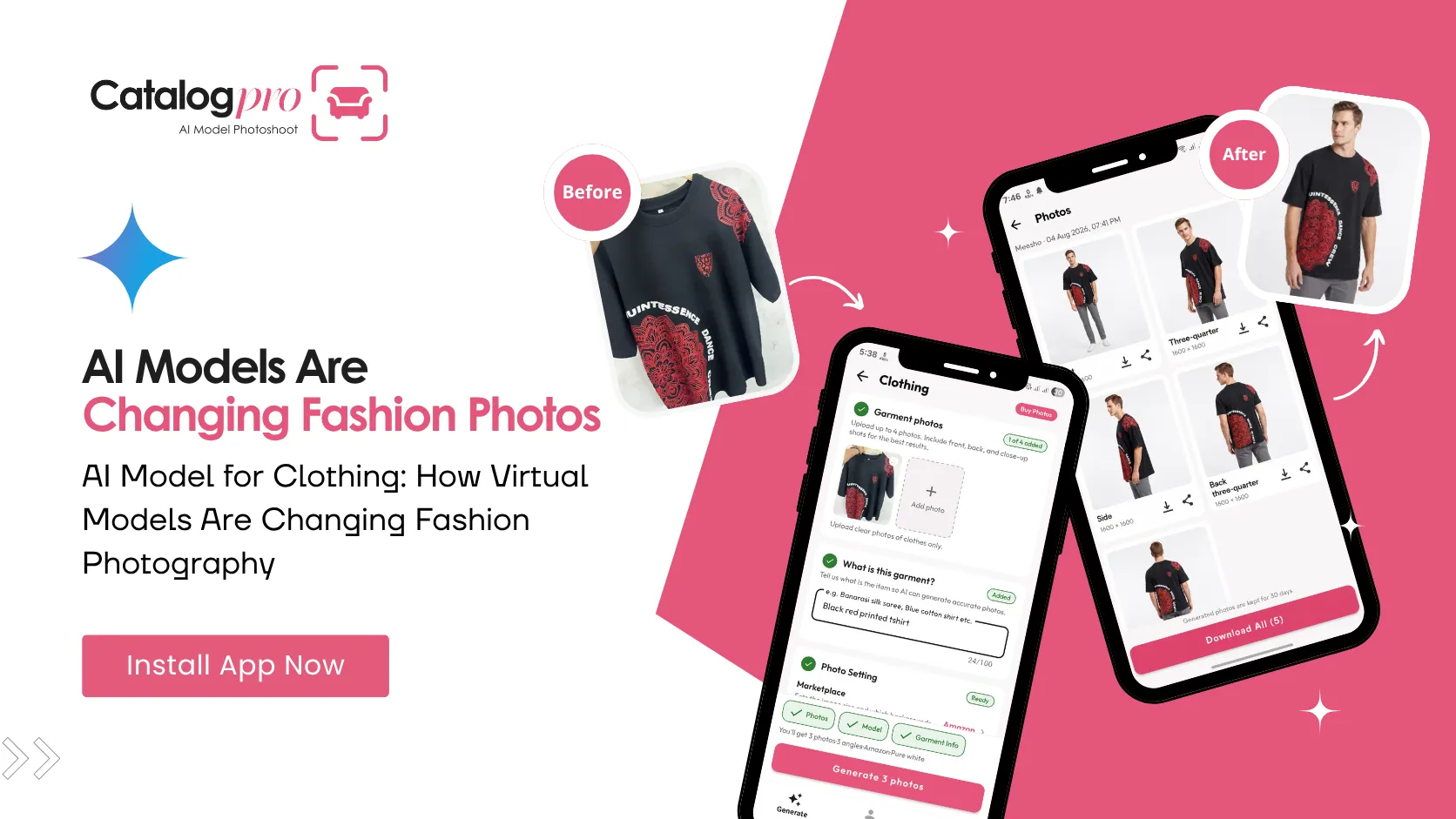
Fashion sellers in India face a fundamental problem: buyers want to see clothes on a real person, but hiring models costs ₹5,000 to ₹25,000 per day. AI models for clothing solve this by generating photorealistic images of virtual models wearing your actual garments — no photoshoot required.
This guide explains how AI clothing models work, which garment types produce the best results, and how Indian sellers are using virtual models to build professional fashion catalogs from their phones.
What Is an AI Model for Clothing?
An AI model for clothing is a computer-generated human figure that "wears" your garment in a photorealistic image. You photograph the clothing item — on a hanger, laid flat, or draped on a surface — and the AI generates images of a virtual model wearing it in natural poses with studio-quality lighting.
Unlike simple background removal or mannequin overlay tools, modern AI clothing models understand fabric drape, body proportions, and how garments naturally fold and stretch. The result looks like a professional model photoshoot — because the AI has been trained on millions of fashion photographs.
Why Fashion Sellers Are Switching to Virtual Models
The shift from real model photography to AI models is driven by three factors that matter most to online sellers:
Cost
A single model photoshoot in India costs ₹10,000 to ₹50,000 when you add up model fees, photographer charges, studio rental, and editing. For a seller with 100 products to list, that is ₹10 lakh or more — before any sales happen. An AI model generates the same quality images for a fraction of the cost, making professional fashion photography accessible to sellers at every scale.
Speed
Traditional photoshoots take days to plan, execute, and edit. You need to coordinate schedules with models, photographers, and makeup artists. Weather, lighting, and model availability all create delays. With AI models, you photograph your garment, select a virtual model, and receive finished images in under two minutes. A seller can photograph and list 50 products in a single day.
Consistency
When you hire different models for different shoots, your catalog looks fragmented. Skin tones change, poses vary, and the overall brand feel shifts from listing to listing. AI models give you a consistent look across your entire catalog. You can use the same virtual model for every product — same face, same body type, same pose style — creating a professional brand identity that builds buyer trust.
Which Garment Types Work Best with AI Models?
AI model technology works across all clothing categories, but some garment types benefit more than others.
Western Wear
T-shirts, shirts, jeans, dresses, jackets, and casual wear produce excellent AI model results. These garments have relatively simple construction and predictable drape patterns. The AI handles them with high accuracy — collar shapes, sleeve falls, and hemlines all render naturally. Western wear is the easiest starting point for sellers new to AI model photography.
Indian Ethnic Wear
Ethnic wear is where AI models provide the most value, because traditional model photography for these categories is especially expensive and complex.
- Sarees — the most challenging garment to photograph. A saree's drape, pallu fall, and pleating are critical to how buyers evaluate the product. AI models trained on Indian fashion data understand saree draping and render the fabric flow realistically.
- Kurtis — India's most-sold fashion category on marketplaces like Meesho and Amazon. AI models show how a kurti falls on the body, how prints and embroidery look when worn, and how the garment pairs with different bottoms.
- Lehengas — heavy embroidery, multiple layers, and floor-length silhouettes make lehenga photography expensive with real models. AI models capture the volume, embroidery detail, and dupatta drape that buyers need to see.
- Salwar suits and anarkalis — flowing fabrics and dupatta styling are rendered naturally by AI models trained on ethnic wear datasets.
Casual and Streetwear
Hoodies, sweatshirts, track pants, and athleisure — these categories are growing fast on Indian marketplaces. AI models render these well because the fabrics are relatively stiff and the silhouettes are straightforward. Sellers listing streetwear can generate model photos in bulk and keep their catalog fresh as trends change.
How AI Model Photography Works
The process is simpler than most sellers expect:
Step 1: Photograph your garment
Take a photo of the clothing item with your phone. You can hang it on a hanger, lay it flat on a surface, or drape it on a mannequin — the AI works with any input. Make sure the garment is wrinkle-free, well-lit, and fully visible in the frame. Natural daylight near a window works well.
Step 2: Choose your AI model
Select a virtual model from the library. You can choose by gender, body type, skin tone, and pose. Some tools let you create a custom model and reuse it across your entire catalog — this is the key to building a consistent brand look.
Step 3: Generate and download
The AI processes your garment photo and generates images of the virtual model wearing it. You get multiple views — front, side, three-quarter angle — with professional studio lighting and a clean background. The entire process takes 30 seconds to 2 minutes per garment.
AI Models vs. Real Models: What Buyers See
A common concern is whether buyers can tell the difference between AI-generated model photos and real photoshoots. In practice, the quality gap has closed significantly:
- Fabric texture — AI models accurately reproduce fabric texture, showing how cotton, silk, chiffon, and georgette drape differently on the body.
- Color accuracy — the garment's actual colors, prints, and embroidery patterns are preserved from your original photo. The AI does not alter the product.
- Natural poses — modern AI models avoid the stiff, mannequin-like poses that plagued earlier virtual model tools. The poses look natural and relaxed, similar to what you would get from a professional model.
- Lighting — studio-quality lighting is applied consistently, with soft shadows and even illumination that makes the garment look its best.
For marketplaces like Myntra, Meesho, Amazon, and Flipkart, AI model photos meet all image quality requirements and are indistinguishable from traditional model photography in search results.
Getting Started with AI Models for Your Clothing Catalog
Catalog Pro makes AI model photography accessible to every fashion seller. The app lets you photograph a garment with your phone, choose from a library of AI models, and generate professional catalog images in under two minutes. You can create a custom AI model and use it across all your listings for a consistent brand look — on Meesho, Myntra, Amazon, Flipkart, or any other marketplace.
There is no subscription, no minimum order, and no photography experience needed. If you can take a phone photo, you can create model photos that compete with brands spending lakhs on professional shoots.
Tips for the Best AI Model Results
- Iron or steam your garment before photographing — wrinkles in the input photo carry through to the AI output
- Use natural daylight or a bright, even light source — harsh shadows confuse the AI
- Photograph the full garment with some margin around it — cropped inputs produce cropped outputs
- For ethnic wear with heavy embroidery, photograph on a contrasting surface so the AI can distinguish the garment edges
- Reuse the same AI model across your catalog for brand consistency
- Generate multiple angles (front, side, back) for each product — marketplaces reward listings with more images
Ready to Try It?
Download Catalog Pro and create your first AI model photo in under 2 minutes — no studio, no model fees, just your phone.
Download Catalog Pro — Free to StartMore Tips for Sellers
AI Product Photography: How It Works and Why Sellers Are Switching
How AI-powered tools are replacing traditional photoshoots for online sellers.
Myntra Product Photography Guide for Sellers (2026)
Everything you need to know about creating professional Myntra fashion photos.
Meesho Clothing Photos: How to Create Professional Fashion Catalog Images
A complete guide to creating Meesho clothing photos that attract buyers.